
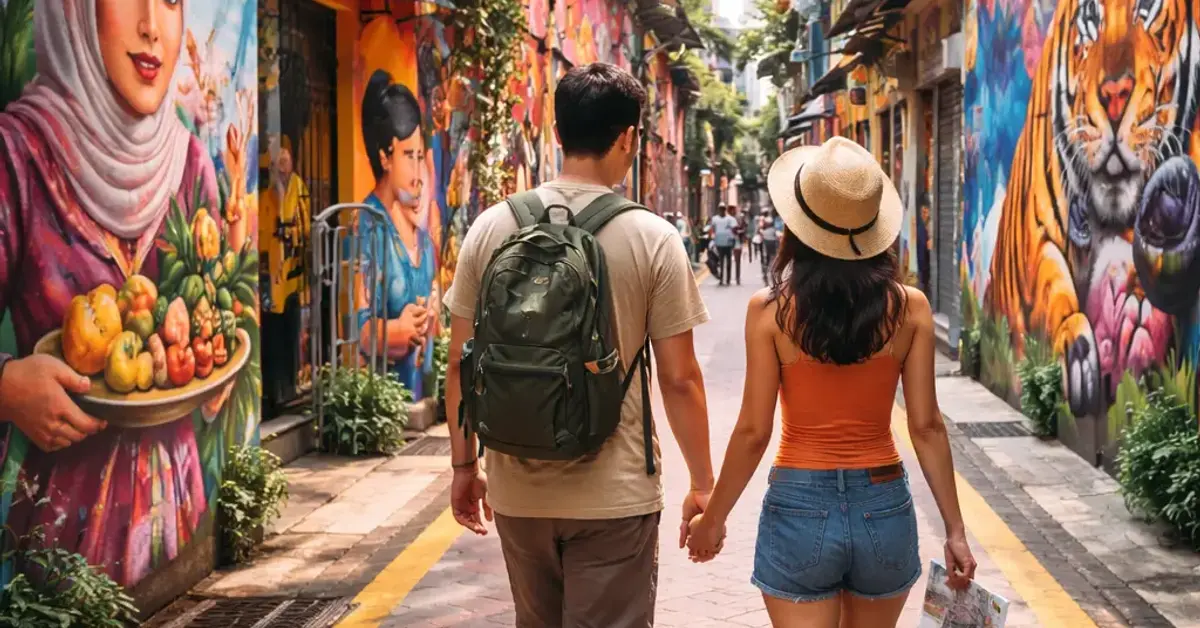
Chow Kit street art self-guided walking tour Key Takeaways
Chow Kit, one of Kuala Lumpur’s oldest neighborhoods, has transformed into an open-air gallery where heritage walls tell stories of the city’s multicultural soul.
- Follow 7 numbered stops, each with a mural description, historical context, and a practical tip for photographers or explorers.
- Discover hidden gems like a century-old Chinese clan hall, a secret speakeasy, and a nasi kandar stall famous among taxi drivers.
- End your walk with local food recommendations and a simple map summary to help you navigate the area.
Why a Chow Kit Street Art Self-Guided Walking Tour Is Worth Your Time
Chow Kit has always been the city’s loud, messy heart — a place where the scent of fried pisang goreng mixes with diesel fumes and incense smoke. Over the past few years, local and international artists have turned its weathered walls into canvases that reflect the neighborhood’s grit and grace. Unlike polished gallery districts, the Chow Kit hidden gems you’ll find here feel alive: a mural of a roti canai spinner next to a real roti canai stall, a portrait of a pineapple vendor whose family has worked the same corner since the 1940s. A Kuala Lumpur walking tour through Chow Kit isn’t just about looking at art — it’s about reading the layers of a community that refuses to be erased by development. For a related guide, see Chow Kit Food Guide: 10 Essential Eats for Food Lovers.
Before You Start the Walking Route
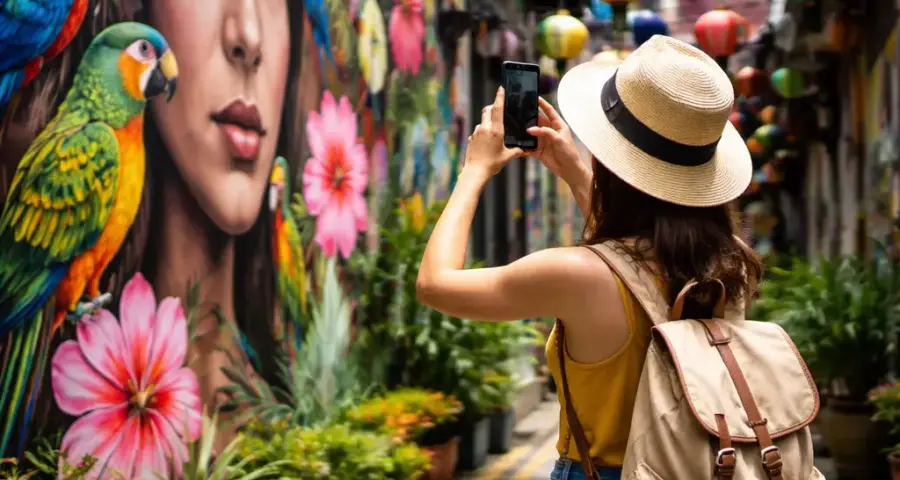
Wear comfortable walking shoes and bring a water bottle — the tropical humidity is no joke. The route begins at the Chow Kit Wet Market (Jalan Haji Hussein 2) and ends near the iconic Coliseum Theatre (Jalan Tuanku Abdul Rahman). Estimated time: 1.5 to 2 hours at a relaxed pace, with an extra 30 minutes for food stops. The best time to go is between 8:00 AM and 11:00 AM, when the market is at its liveliest and the light is soft for photos. Download a offline map of the area — signal can drop between the tall shophouses.

Stop 1: The Pineapple Lady (Jalan Haji Hussein 2)
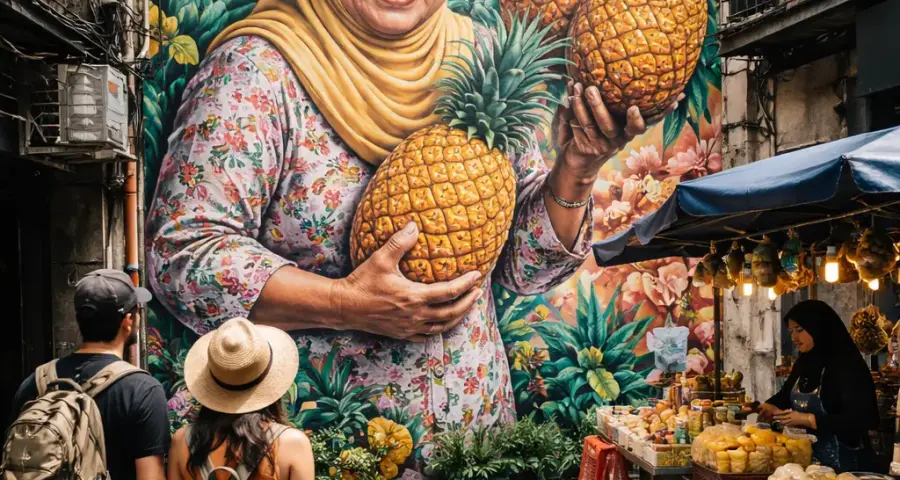
Your first mural is tucked between a fruit stall and a bicycle repair shop. Painted by local artist Kenny Yap, the piece shows an elderly woman in a floral baju carrying a bamboo basket of pineapples. The real-life subject, Madam Tan, sold pineapples at this spot for 47 years before retiring. The mural captures her warm, wrinkled smile and the exact shade of yellow of her favorite fruits. Tip: Visit early — the morning sun hits the mural directly, making the colors pop for photographs.
Stop 2: Unity Alley (Lorong Haji Hussein 1)
A narrow lane that connects two main roads, Unity Alley is covered in a collaborative piece by three Malaysian artists. Each section represents one of the country’s major ethnic groups: a Chinese dragon dance, a Malay kite (wau bulan), and an Indian kolam pattern. Look closely — the kolam uses real chalk, and locals refresh it every Friday. This spot often appears in Chow Kit hidden gems lists because it’s easy to walk past without glancing left. Tip: Stand at the far end of the alley and use a wide-angle lens to capture all three sections in one frame.
Stop 3: The Roti Canai Spinner (Jalan Raja Alang)
This large-format mural by Indonesian artist Darbotz depicts a roti canai maker mid-toss, with the dough suspended in a perfect circle. The stall right next to it, Roti Canai Rahim, serves the real thing — and the mural’s character is based on Rahim himself, who has been spinning dough for 32 years. The vibrant yellow background makes this one of the most Instagrammed walls in the neighborhood. Tip: Buy a roti canai (RM 1.50) and hold it up in front of the mural for a fun comparison shot.
Stop 4: Sam Poh Tong Clan Hall (Jalan Kampung Pandai)
A hidden gem that isn’t painted on a wall — but rather is the wall itself. The Sam Poh Tong clan hall was built in 1896 by Hokkien migrants. Its faded green facade and intricate wood-carved doors have been left un-restored, giving you a true sense of time. Inside (if open), you’ll find ancestral tablets and a small courtyard with a koi pond. This is a sacred space, so dress modestly and speak softly. Tip: Push the main gate gently — the latch creaks, and the caretaker prefers if you wait for someone to let you in rather than forcing it.
Stop 5: The Secret Speakeasy (Lorong Raja Muda 4)
Look for a plain steel door under a blue sign that says “Ah Chai’s Trading.” Knock twice and wait. Behind the door lies Bar Pu-Lan, a small speakeasy decorated with vintage Malaysian movie posters and a mural of P. Ramlee painted on the back wall. The bartenders can whip up a mean soursop sour using local fruit. This stop is more about the hidden experience than a large mural, but the P. Ramlee portrait inside is a work of art in itself. Tip: The bar opens at 5 PM, so if you’re doing the walk in the morning, save this for a sunset return.
Stop 6: The Market Mosaic (Inside Chow Kit Wet Market)
The wet market itself is a living artwork. On the second floor, along the wall near the poultry section, a 30-meter mosaic made of broken ceramic tiles depicts scenes from a 1960s market day — trishaw drivers, durian sellers, and a man balancing a basket of eggs on his head. The tiles were salvaged from demolished shophouses in the area. Tip: The market can be slippery after 9 AM when water and fish scales cover the floor. Wear non-slip shoes and keep your camera bag closed.
Stop 7: The End — Coliseum Theatre and Coliseum Cafe (Jalan Tuanku Abdul Rahman)
Your final stop is the Coliseum Theatre, built in 1921. The art deco building now serves as a cinema for classic films and a backdrop for a mural by Ernest Zacharevic — the Lithuanian artist famous for Penang’s “Kids on a Bicycle.” His Chow Kit piece shows a movie usher holding a tray of popcorn, with real popcorn kernels glued onto the mural’s surface (though many have been stolen, so don’t expect a full tray). Right next door is Coliseum Cafe, a colonial-era coffee shop that serves Hainanese chicken chop and barley ice. Tip: Order the chicken chop with a side of homemade Worcestershire sauce — it’s a recipe that hasn’t changed since 1921.
Map Summary and Route Flow
Here is a quick reference of the order: Chow Kit Wet Market (Stop 1) → Unity Alley (Stop 2) → Roti Canai Rahim (Stop 3) → Sam Poh Tong Hall (Stop 4) → Lorong Raja Muda 4 (Stop 5) → Back to Market for Mosaic (Stop 6) → Walk south to Coliseum Theatre (Stop 7). The entire route is about 1.8 km with minimal backtracking. You can download a free map from Visit KL’s official walking guide (linked below in Useful Resources).
Local Food Recommendations Along the Route
| Stop | Dish to Try | Approx. Price (RM) |
|---|---|---|
| Wet Market (Start) | Curry puffs from Mak Cik Salmah’s stall | 1.50 |
| Roti Canai Rahim (Stop 3) | Roti canai with dhal | 1.50 |
| Sam Poh Tong area | Cendol from roadside cart at Jalan Kampung Pandai | 2.50 |
| Coliseum Cafe (Stop 7) | Hainanese chicken chop with barley ice | 9.00 |
Tips for a Better Self-Guided Walk
Bring a small umbrella — sudden tropical downpours are common even during the dry season. Talk to the shopkeepers; many are happy to share stories about the murals or point you to a Chow Kit hidden gem not on this list. Avoid taking photos of people without asking first, especially market vendors. And most importantly, take your time. The joy of a Kuala Lumpur walking tour in Chow Kit is the unexpected — a cat sleeping on a pile of jackfruit, a game of checkers under a tree, a lady singing along to a radio on a hot afternoon.
Useful Resources
Download the official Visit KL walking guides for additional heritage routes and updated event schedules.
Learn more about Chow Kit’s history and ongoing art projects at Think City’s neighborhood page.
Frequently Asked Questions About Chow Kit street art self-guided walking tour
How long does the Chow Kit street art self-guided walking tour take?
Plan for 1.5 to 2 hours at a relaxed pace, plus 30 minutes if you stop for food. The full route covers about 1.8 km.
Is the walking tour suitable for children?
Yes, the route is mostly flat and safe, though the wet market can be crowded and slippery. Children will enjoy the colorful murals and the chance to see live chickens and fish.
Can I do this tour in the afternoon?
Yes, but morning (8 AM–11 AM) is ideal because the market is busiest, the light is better for photos, and the temperature is cooler. Afternoon walks are possible, but prepare for heat and possible rain.
Are the murals free to view?
Yes, all the murals mentioned are on public walls or accessible public spaces. The only exception is the speakeasy (Bar Pu-Lan), which requires a drink purchase.
Which is the most Instagrammable mural on the tour?
The Roti Canai Spinner on Jalan Raja Alang is the most photographed due to its bright yellow background and action pose. The Pineapple Lady also gets a lot of love for its warm, nostalgic feel.
Is the wet market open every day?
Yes, Chow Kit Wet Market operates daily from around 6:00 AM to 2:00 PM. Sunday mornings are the busiest. It is closed on some public holidays.
Can I visit the Sam Poh Tong clan hall any time?
The hall is usually open from 9:00 AM to 4:00 PM, but hours vary. Ring the bell or knock gently if the gate is closed — the caretaker may let you in.
Are there restrooms along the route?
Public restrooms are available inside the wet market (small fee, RM 0.50) and at Coliseum Cafe. Some shops may allow customers to use their facilities.
Is the walking tour wheelchair accessible?
Most of the route has uneven pavement and narrow lanes, making it challenging for wheelchairs. The wet market floor is also often wet and cluttered. A motorized wheelchair with good tires may manage with some difficulty.
What time does Bar Pu-Lan open?
The speakeasy opens at 5:00 PM and stays open until late, typically midnight. It is closed on Mondays.
Are guided tours available if I prefer a group?
Yes, several local companies offer guided heritage walks of Chow Kit, including Kuala Lumpur Walking Tours and MY Heritage Tours. They often include additional stories and food tastings. For a related guide, see Chow Kit’s Local Market: 5 Must-Do Activities After Kooky Plate KL.
Can I bring my dog on the walk?
Dogs are uncommon in the wet market area and may cause stress to vendors or stray cats. It is better to leave pets at home, though small dogs in carriers are generally tolerated.
Is it safe to walk alone in Chow Kit?
Yes, the area is generally safe during daylight hours. As with any busy urban district, keep an eye on your belongings and avoid displaying valuables openly. Stick to main lanes after dark.
Which MRT or LRT station is closest to the starting point?
Chow Kit MRT station (on the Kajang Line) is a 5-minute walk from the wet market. Exit at Gate B and walk north along Jalan Haji Hussein. Medan Tuanku LRT station (Kelana Jaya Line) is also nearby but requires a 10-minute walk.
Are there any entrance fees along the route?
No, all murals and public spaces are free. Bar Pu-Lan requires a drink purchase, and the clan hall suggests a small donation if you wish.
Is photography allowed at Sam Poh Tong clan hall?
Yes, but turn off flash and be respectful of worshippers. Avoid photographing ancestral tablets close up without permission.
What is the best time to photograph the Unity Alley mural?
Between 10:00 AM and 11:30 AM, when sunlight filters through the buildings and illuminates the chalk kolam section. On overcast days, any time is fine.
Are there any murals by international artists on the tour?
Yes, the Coliseum Theatre mural is by Ernest Zacharevic (Lithuanian), and the Roti Canai Spinner is by Darbotz (Indonesian). The rest are by local Malaysian artists.
Can I extend the walking tour beyond 7 stops?
Absolutely. The area around Jalan Masjid India and Kampung Baru offers additional street art, traditional goldsmiths, and hidden food courts. Ask locals for recommendations.
What should I do if I get lost?
Most streets in Chow Kit have signboards in Malay and English. Landmarks like the wet market and Coliseum Theatre are well-known. Ask any shopkeeper for “Pasar Chow Kit” or “Coliseum” and they will point the way.