

evaluate the clarity of staff in explaining menu items Key Takeaways
When guests visit a restaurant, the quality of their experience often hinges on how well staff communicate.
- Evaluate the clarity of staff in explaining menu items by testing their ability to describe dishes without jargon and answer common allergens questions.
- Best practices for menu item explanations include using sensory language and offering pairing suggestions.
- Assessing call-ahead seating systems ensures guests feel welcomed and wait times are communicated honestly.
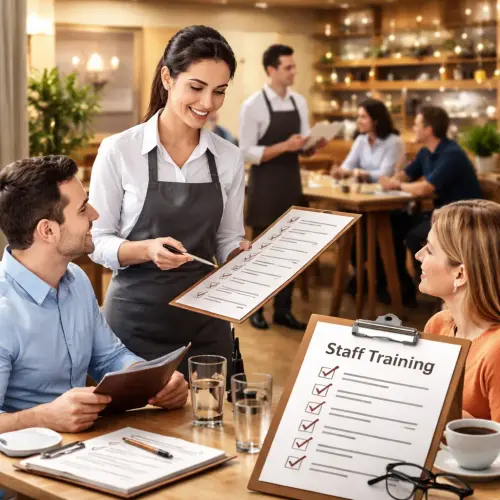
Why You Must Evaluate the Clarity of Staff in Explaining Menu Items
A server who stumbles over ingredients or fails to recommend a wine pairing can sour an entire meal. That is why managers need a structured way to evaluate the clarity of staff in explaining menu items. A clear staff can pivot from describing a daily special to handling dietary requests in seconds. This skill directly impacts guest satisfaction, average check size, and table turnover. For a related guide, see 7 Menu Highlights Mistakes That Cost Restaurants Sales.
When staff lack clarity, guests ask more follow-up questions, which slows service. They also feel less confident ordering and may skip high-margin items. By creating a consistent evaluation system, you turn uncertainty into a competitive advantage.
The Three Pillars of Staff Clarity
Effective communication rests on understanding the menu, adapting to guest needs, and managing logistics like seating. The three core areas to evaluate are:
- Menu Item Explanations: Can staff describe ingredients, cooking methods, and flavor profiles accurately?
- Recommendations: Do they pair dishes with beverages or sides based on guest preferences?
- Call-Ahead Seating Systems: How well do they manage wait times and special requests over the phone?
How to Evaluate the Clarity of Staff in Explaining Menu Items: A Step-by-Step Process
An evaluation should be practical and fair. Follow these steps to get reliable data without making servers nervous.
Step 1: Set Clear Evaluation Criteria
Define what “clarity” looks like in your restaurant. Use a scoring rubric that covers:
- Accuracy of ingredient knowledge (e.g., “This soup contains cashew cream, not dairy”).
- Use of descriptive language (e.g., “lightly seared with a caramelized crust”).
- Ability to answer common dietary questions (gluten, nuts, vegetarian options).
Step 2: Use Mystery Shoppers or Role-Play Exercises
Send a mystery shopper with a script. Ask them to request a recommendation for a spicy dish, then follow up with an allergen question. Record how the server responds. Alternatively, run a weekly role-play where a manager pretends to be a guest asking about the seasonal special. This low-pressure practice builds confidence.
Step 3: Score Call-Ahead Interactions
Call-ahead seating is a key touchpoint. Train a team member to call your restaurant and ask about estimated wait times, group sizes, and any menu questions. Grade the host on politeness, accuracy, and willingness to offer alternatives (e.g., reserved bar seating as a wait-list option). For a related guide, see Service Efficiency: 7 Proven Ways to Cut Wait Times and Boost Accuracy.
Step 4: Analyze Sales Data and Guest Feedback
Compare upsell rates on shifts where staff scored high on clarity versus low scores. Use comment cards or online reviews to spot patterns. If multiple guests mention confusion about a dish, that signals a training gap.
Best Practices for Menu Item Explanation Best Practices
Teaching staff the menu item explanation best practices ensures consistency. These techniques work across casual and fine dining settings.
Use the STAR Method (Sensory, Taste, Accompaniments, Recommendations)
For each menu item, staff should cover:
- Sensory description: “This steak has a smoky aroma and a charred exterior.”
- Taste profile: “It’s savory with a hint of black pepper and garlic.”
- Accompaniments: “Served with roasted potatoes and a red wine jus.”
- Recommendations: “Pairs beautifully with our Malbec.”
Avoid Restaurant Jargon
Terms like “mise en place,” “demi-glace,” or “sous-vide” can confuse guests. Train staff to translate jargon into plain language. For example, “sous-vide” becomes “cooked slowly in a vacuum bag for extra tenderness.”
Role-Play Dietary Questions
Prepare answers for the top five dietary needs: gluten-free, dairy-free, nut allergy, vegan, and low sodium. Staff should say confidently, “Our kitchen can modify this dish to be vegan by substituting the cheese with avocado.”
Assessing the Call-Ahead Seating System Assessment
An effective call-ahead seating system assessment ensures guests feel valued before they walk through the door.
Key Questions to Ask During the Assessment
- Does the host confirm the guest name and spell it back?
- Are wait times realistic, or does the staff frequently overpromise?
- Can the host offer text or phone alerts when the table is ready?
- Is there a script for handling large parties or special celebrations?
Common Mistakes in Call-Ahead Seating
One frequent error is failing to ask about mobility needs (e.g., ground-floor seating for guests with walkers). Another is not mentioning the wait time for call-ahead versus walk-in guests. Transparency builds trust.
Troubleshooting Staff Clarity Issues
Even with training, problems arise. Here is how to fix them.
Server Doesn’t Know the Daily Special
Schedule a five-minute briefing before each shift where the chef describes the special. Require servers to taste it. Then quiz them with two questions: “What is the main ingredient?” and “What drink pairs with it?”
Guest Complains About Wait Time
If call-ahead seating estimates are often wrong, audit how the host calculates wait times. Use a digital wait-list tool that updates in real time. Assign a second host during peak hours to manage phone calls and walk-ins separately.
Optimization Tips for Long-Term Clarity
Consistent improvement prevents clarity from declining. Use these tips to stay ahead.
- Quarterly menu refreshes: When the menu changes, run a training session on new items within 48 hours.
- Video feedback: Record role-plays and review them with staff individually. Focus on tone of voice and phrasing.
- Guest surveys: Add one question: “How clear was our staff in explaining menu items?” Tie bonuses to clarity scores.
- Peer mentoring: Pair new hires with experienced servers who model clear communication.
Useful Resources
For deeper training on staff clarity evaluation, review the following guides:
- National Restaurant Association – Staff Training Resources
- Tripadvisor Restaurant Management – Guest Feedback Analysis
Frequently Asked Questions About evaluate the clarity of staff in explaining menu items
How often should I evaluate the clarity of staff in explaining menu items?
We recommend a formal evaluation quarterly, with informal spot checks weekly after menu changes.
What is the best way to test staff knowledge of ingredients?
Use a written quiz on top allergens and a role-play scenario asking about a specific dish.
How can I improve staff recommendations for wine pairing?
Offer weekly tasting of pairing combos and require servers to describe the flavor match in one sentence.
What metrics indicate staff clarity is improving?
Higher upsell conversion rates, fewer guest questions per table, and positive online reviews mentioning knowledgeable staff.
How do I handle a guest who asks about gluten-free options?
Train staff to immediately say, “We have three gluten-free options on the menu. I’ll let the kitchen know to avoid cross-contamination.”
Should I use mystery shoppers to evaluate clarity?
Yes, mystery shopping provides unbiased feedback. Hire a service or trade with another restaurant to keep costs low.
What is the biggest mistake staff make when explaining menu items?
Using generic phrases like “it’s good” instead of describing cooking method, texture, or flavor.
How do I train new servers on call-ahead seating quickly?
Create a one-page script with expected responses for common calls: party size, wait time, and how alerts work.
Can call-ahead seating systems affect clarity evaluations?
Definitely. A guest who receives a confusing wait time may question the staff’s overall competence.
What digital tools help with call-ahead seating accuracy?
Platforms like Yelp Waitlist, OpenTable, or NoWait update estimates in real time and reduce human error.
How do I evaluate staff clarity without making them feel targeted?
Frame evaluations as coaching opportunities. Share positive examples along with areas for improvement.
What should I do if a server consistently gives inaccurate descriptions?
Provide one-on-one training with taste tests and a simplified reference sheet. If no improvement in two weeks, reassign stations.
Is it enough to just read menus aloud to polish clarity?
No. Encourage staff to personalize explanations: “If you love spicy food, this Cajun pasta has a kick that’s just right.”
How do I measure the impact of clearer menu explanations on tips?
Compare average tip percentages before and after a clarity training session on the same shift and day of the week.
What role does body language play in staff clarity?
Guests perceive staff who maintain eye contact and open posture as more trustworthy and knowledgeable.
How can managers reinforce clarity during busy hours?
Use brief pre-shift huddles to highlight one dish or pairing to master that day. Keep it to two minutes.
What should I include in a staff clarity scorecard?
Ingredients accuracy, allergen awareness, recommendation relevance, tone, and wait-time honesty for call-ahead.
Are there certifications for restaurant staff communication skills?
Courses like ServSafe Manager include communication modules. The National Restaurant Association offers customer service certifications.
How do I handle a guest who is unhappy with a staff recommendation?
Train staff to apologize and offer a replacement without argument: “I’m sorry that didn’t meet your expectations. Let me suggest a different option.”
What is the simplest way to start evaluating staff clarity today?
Pick three menu items and ask each server to explain them in 30 seconds. Score them on clarity, accuracy, and enthusiasm.