
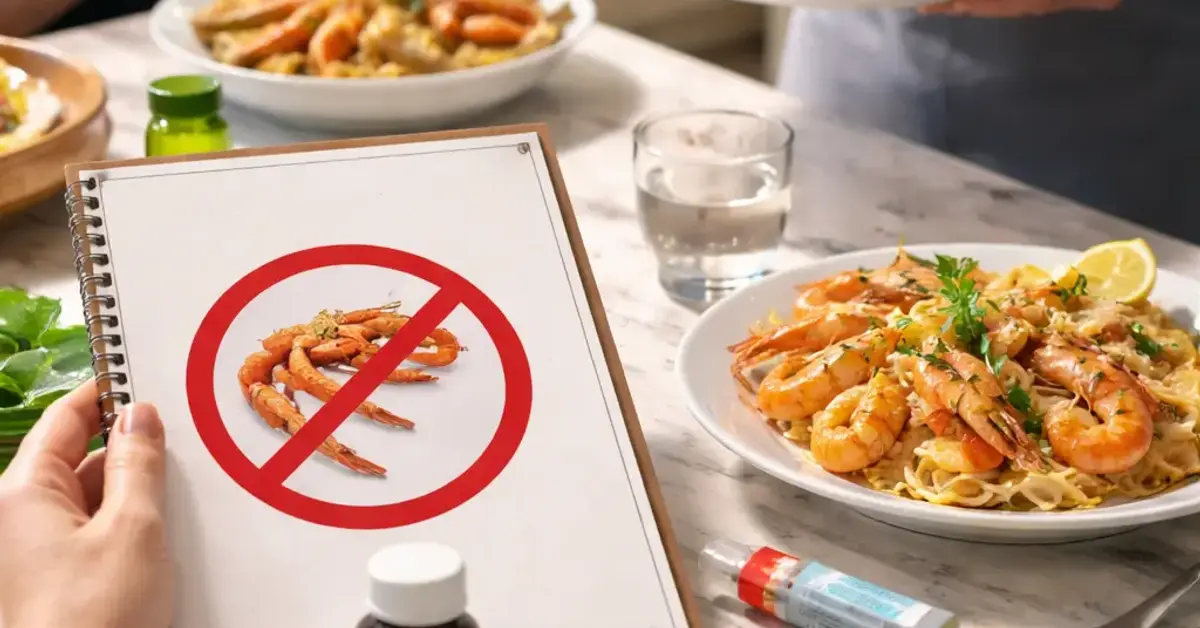
shellfish allergy when ordering prawn dishes Key Takeaways
Managing a shellfish allergy when ordering prawn dishes requires a clear strategy, from menu decoding to emergency planning.
- Learn to identify hidden prawn ingredients and risky cooking methods before ordering.
- Discover how to communicate your allergy clearly to restaurant staff — even across language barriers.
- Get a practical checklist for emergency preparedness and restaurant selection.
Understanding the Risks Behind Prawn Dishes
For anyone with a shellfish allergy when ordering prawn dishes, the first line of defense is knowing where the danger hides. Prawns belong to the crustacean family, which also includes shrimp, lobster, and crab. Reactions can range from mild hives to life-threatening anaphylaxis. Even a single droplet of prawn broth left on a grill can be enough to trigger symptoms in highly sensitive individuals. For a related guide, see Nut Allergy Safety: 6 Dishes With High Cross-Contamination Risk.
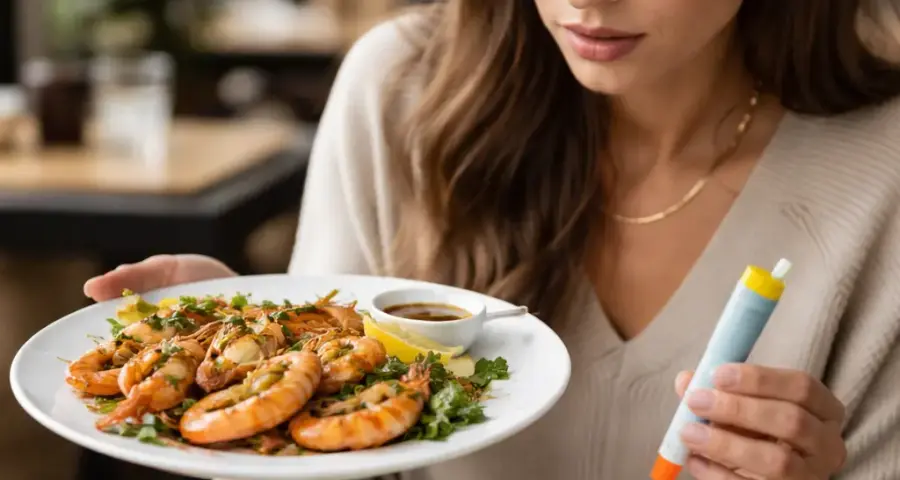
Many restaurants use the same fryers for prawn tempura and vegetable spring rolls. Stocks and soups often get a prawn-based boost without being listed on the menu. And in Asian cuisines, fermented shrimp paste or fish sauce may contain prawn derivatives. The risk isn’t just in the main ingredient — it’s in every shared cooking surface and seasoning blend.
Understanding these hidden vectors helps you move from anxious diner to informed guest. The next sections walk you through exactly how to communicate, verify, and protect yourself at every stage of the meal.
5 Smart Steps to Order Prawn Dishes Safely
Follow these five actions every time you dine out. They create a repeatable safety routine that reduces reliance on luck or assumption.
Step 1: Research the Restaurant Before You Go
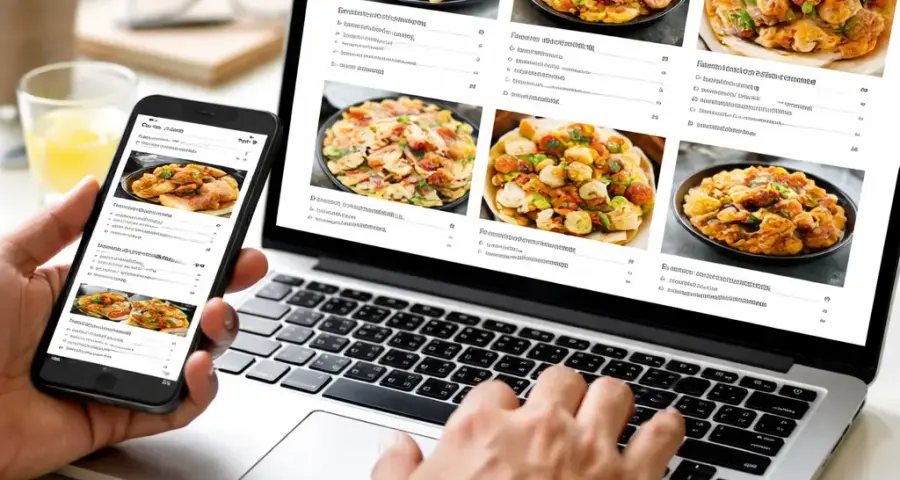
Before booking a table, check the restaurant’s menu online. Look for phrases like “shellfish-focused,” “seafood house,” or “prawn specialties.” Avoid places where prawn dishes dominate, because cross-contact is nearly guaranteed in high-volume kitchens serving crustaceans. For a related guide, see Low-Fat Choices at Kooky Plate KL: 7 Easy Picks for a Healthy Meal.
Call ahead during a slow period and ask specific questions: “Do you use prawn stock in your soups?” or “Can you guarantee a separate fryer for non-shellfish items?” If the staff hesitates or seems unsure, choose another venue. Your safety is not worth guessing.
Step 2: Communicate Your Allergy in Person — Clearly
When you arrive, tell your server about your allergy immediately. Use clear, simple language: “I have a severe shellfish allergy. Prawns, shrimp, and lobster will send me to the hospital.” Avoid ambiguous terms like “seafood allergy” because some people differentiate between shellfish and fish. Handing over a printed allergy card — available in many languages — removes confusion.
Ask your server to confirm with the chef that your meal will have no prawn products. If the restaurant has a dedicated allergy menu, request it. Always confirm that the same cooking oil, grill, and utensils are not shared with prawn-containing items.
Step 3: Decode the Menu for Hidden Prawns
Even a dish titled “Vegetable Pad Thai” or “Grilled Chicken Caesar” can contain prawn components. Look for these common hiding spots:
- Broths and stocks — many chefs add prawn heads or shells for flavor.
- Compound butters and sauces — hollandaise, remoulade, and curry bases sometimes use prawn paste.
- Fried items — shared fryers are a top source of cross-contact.
- Marinades — fish sauce and shrimp paste are common in Southeast Asian recipes.
- Croutons or garnishes — sometimes prawn flakes are sprinkled as a flavor accent.
When in doubt, ask for a plain version of the protein and a side of steamed vegetables. Simple grilled options with no shared preparation area are safest.
Step 4: Watch for Red Flags During Service
Even after you’ve ordered safely, stay alert. These warning signs indicate your allergy instructions may not have been taken seriously:
- The server does not write down your allergy or return to confirm with the kitchen.
- Your dish arrives with the same garnish or sauce as a prawn dish at your table.
- The kitchen offers a “quick fix” like picking prawns off a finished plate.
- You see fried items come from the same fryer used for prawn tempura.
- Staff members seem annoyed or dismissive when you ask questions.
If any red flag appears, don’t eat the food. Politely ask to speak with the manager and re-evaluate your order. Remember, your health comes before politeness or restaurant reputation.
Step 5: Prepare Your Emergency Plan in Advance
No matter how careful you are, accidents happen. Always carry two doses of your prescribed epinephrine auto-injector (EpiPen, Auvi‑Q, or generic). Keep antihistamines as a backup for mild reactions only — they never replace epinephrine.
Inform your dining companions about where you keep your auto-injector and how to use it. Identify the nearest hospital or urgent care center before you eat. If you start feeling throat tightness, difficulty breathing, or widespread hives, use your epinephrine immediately and call emergency services. Do not wait to see if symptoms improve.
A written emergency action plan from your allergist, stored on your phone, can guide you and the restaurant staff through a crisis.
Red Flags to Watch for When Ordering
Beyond the in-service warnings, some menu language and restaurant practices are perennial risks. Watch for these patterns:
- “House-made” sauces or stocks — they often contain prawn shells or paste for flavor.
- “Chef’s special” — the chef may change ingredients daily and unknowingly add prawn.
- “Seafood medley” — almost always mixes prawns with other shellfish.
- “Fusion” cuisine — cross-cultural cooking often blurs ingredient boundaries.
- Buffet or shared-platform service — spoons and trays transfer allergens easily.
- Ethnic restaurants where language barriers increase miscommunication — bring a translated allergy card.
Emergency Precautions Every Diner Should Take
Your emergency preparation doesn’t end with epinephrine. Here is a practical checklist to follow before every meal out:
| Precaution | Why It Matters |
|---|---|
| Carry two epinephrine auto-injectors | One dose may not be enough; a second is needed if symptoms return. |
| Wear a medical alert bracelet | Paramedics and bystanders identify your allergy instantly if you are unable to speak. |
| Share your location with a contact | Someone knows where you are in case of emergency. |
| Review the restaurant’s injury reporting system | Some chains have a corporate allergy policy you can reference. |
| Eat early when the kitchen is less rushed | Slower service often means more careful preparation. |
| Skip high-risk cuisines outright | Seafood-focused restaurants (especially crab houses, shrimp shacks, and sushi bars) are hardest to manage. |
Useful Resources
For deeper guidance on managing food allergies while dining out, check these authoritative sources:
- FARE’s Restaurant Guide for Food Allergies — practical tips and downloadable chef cards.
- AllergyHome’s Restaurant Safety Toolkit — free communication cards in multiple languages.
Frequently Asked Questions About shellfish allergy when ordering prawn dishes
Can I eat prawn-flavored snacks if I have a shellfish allergy ?
No, prawn-flavored snacks often contain actual prawn powder or extract. Even artificial flavoring processed in a facility that handles crustaceans may cause cross-contact. Avoid them entirely.
What’s the difference between shellfish allergy and fish allergy?
Shellfish (crustaceans and mollusks) and fish (like salmon or tuna) are biologically different. Some people are allergic to both, but many react only to one group. Always clarify with your allergist.
Is it safe to eat at a seafood restaurant if I have a shellfish allergy ?
It is very risky because cross-contact is high. If you must go, choose a restaurant with a dedicated allergy protocol, call ahead, and eat only plain grilled items from a separate surface.
Can I order prawn dishes if I’m allergic to shellfish?
No. Prawns are crustaceans and trigger shellfish allergies. Do not order prawn dishes or any dish containing prawns, shrimp, lobster, or crab.
What should I do if the restaurant says a dish is and quot;shellfish-free and quot; but I’m unsure?
Ask to speak with the chef directly. If that’s not possible or the answer still feels uncertain, order something else — preferably a simple grilled protein with no shared equipment.
Can cross-contact happen even if prawns aren’t listed on the menu?
Yes, frequently. Shared fryers, grill surfaces, cutting boards, and utensils are common sources. Always ask about preparation practices, not just ingredients.
How do I order safely in a foreign country?
Carry a printed allergy card translated into the local language. Use a translation app for verbal communication. Stick to reputable chain restaurants with standardized allergy procedures.
Are there any prawn substitutes that look like real prawns?
Yes, some plant-based prawn alternatives exist, but read labels carefully. Some are made in facilities that also process crustaceans, and they may still contain shellfish traces.
Can I trust waiter suggestions about allergy safety?
Not always. Waitstaff may not be trained in allergen cross-contact. Always ask them to confirm with the chef or manager and get a clear yes or no.
What if I accidentally eat a prawn?
Use your epinephrine auto-injector at the first sign of a systemic reaction (throat tightness, wheezing, dizziness, widespread hives) and call emergency services. Do not wait.
Does cooking destroy shellfish allergens?
No. Cooking does not eliminate the allergenic proteins in shellfish. Boiling, frying, or grilling may change the texture but not the allergenicity.
Can I be allergic to prawns but not to crab?
Yes, some people react to specific crustaceans. However, because cross-reactivity is common, many allergists advise avoiding all crustaceans unless testing proves otherwise.
What is the most common hidden source of prawn in restaurant food?
Broths and stocks are the top culprits. Many chefs use prawn heads or shells to enhance flavor in soups, stews, and sauces without listing them on the menu.
Is it safe to eat fried items if the restaurant also fries prawns?
No. Shared fryers are a high-risk source of cross-contact. Request baked, grilled, or steamed alternatives prepared on a separate surface.
Can I trust a and quot;shellfish-free and quot; label on a menu?
Only if you confirm directly with the kitchen. Some restaurants use the term loosely or only consider the ingredient list, not cross-contact.
What information should my allergy card include?
Your name, specific allergens (e.g., “all crustacean shellfish including prawns, shrimp, lobster, crab”), severity, emergency instructions, and contact for your allergist or emergency contact.
How do I handle a restaurant that doesn’t take allergies seriously?
Politely but firmly explain the medical necessity. If they still dismiss your concerns, leave. No meal is worth your health. Consider leaving a public review to warn others.
Are buffets safe for shellfish allergy sufferers?
Extremely risky. Shared serving utensils, splattering sauces, and crumbs from adjacent dishes make cross-contact almost certain. Avoid buffets entirely.
Can I take antihistamines before eating to prevent a reaction?
No. Antihistamines only treat mild symptoms; they do not prevent anaphylaxis. Never rely on pre-medication as a substitute for allergen avoidance.
What should I do if I feel a reaction starting at the table?
Use your epinephrine immediately, call 911, and tell the restaurant staff so they can assist. Do not drive yourself to the hospital. Stay seated, keep your airway clear, and wait for paramedics.